Frequently Asked Questions

Clear, factual answers regarding Central Park Commerce Center (Project Tango), its operations, and community impact.

What is the Central Park Commerce Center (Project Tango)?

The Central Park Commerce Center (Project Tango) is a planned industrial and employment site along Southern Boulevard in western Palm Beach County. The property has been approved for industrial uses since 2016. A data center is being planned within that approved framework.

What is a data center?

A data center is a secure technology facility that stores and processes digital information. Data centers support many services people rely on every day, including online banking, healthcare systems, emergency communications, education, navigation, streaming, and business operations. Most activity occurs indoors, and the facilities are not open to the public.

Why are data centers important?

Modern life depends on digital infrastructure. Data centers help ensure that essential services remain reliable, secure, and available at all times, including communications systems, medical networks, financial services, and cloud-based tools used by businesses and schools.

Where is the project located?
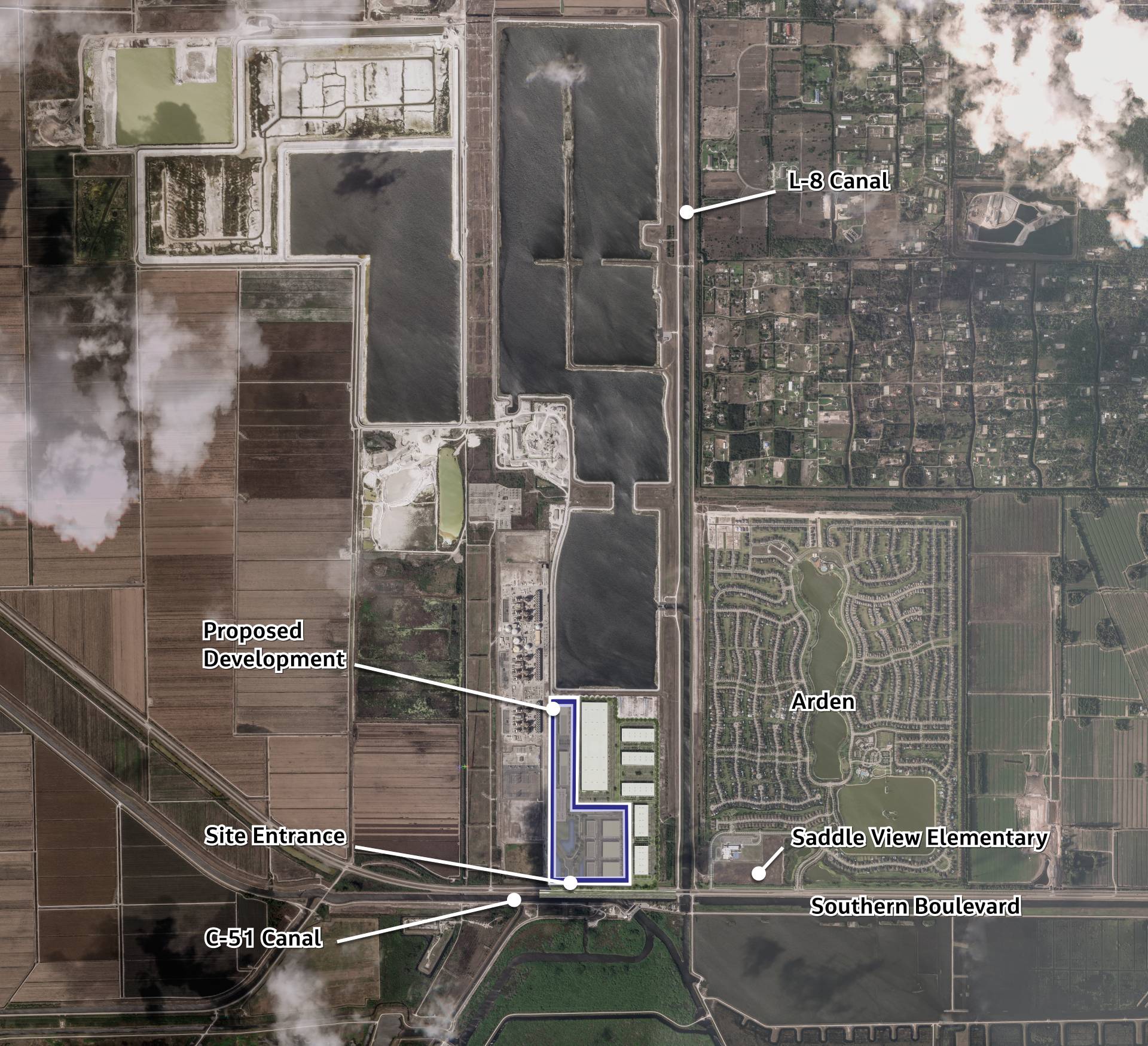
Central Park Commerce Center Context Map

The site is located along Southern Boulevard within the Central Park Commerce Center. It sits adjacent to two regional electrical substations, interstate transmission lines, and Florida Power & Light's (FPL) West County Energy Center, which is a 3,800-megawatt natural gas-fired power generation facility. It is separated from nearby residential areas by canals, open space, wildlife corridors, setbacks, berms, and landscaped buffers.

How far is the project from homes and schools?

Following the public hearing on December 11, 2025, the project team has advanced building engineering and design, commenced a detailed sound study, and is revising the project plans so that the nearest homes and the school are about 2,000 feet away from the proposed data center buildings - roughly 5.5 football fields.

What will the buildings look like?
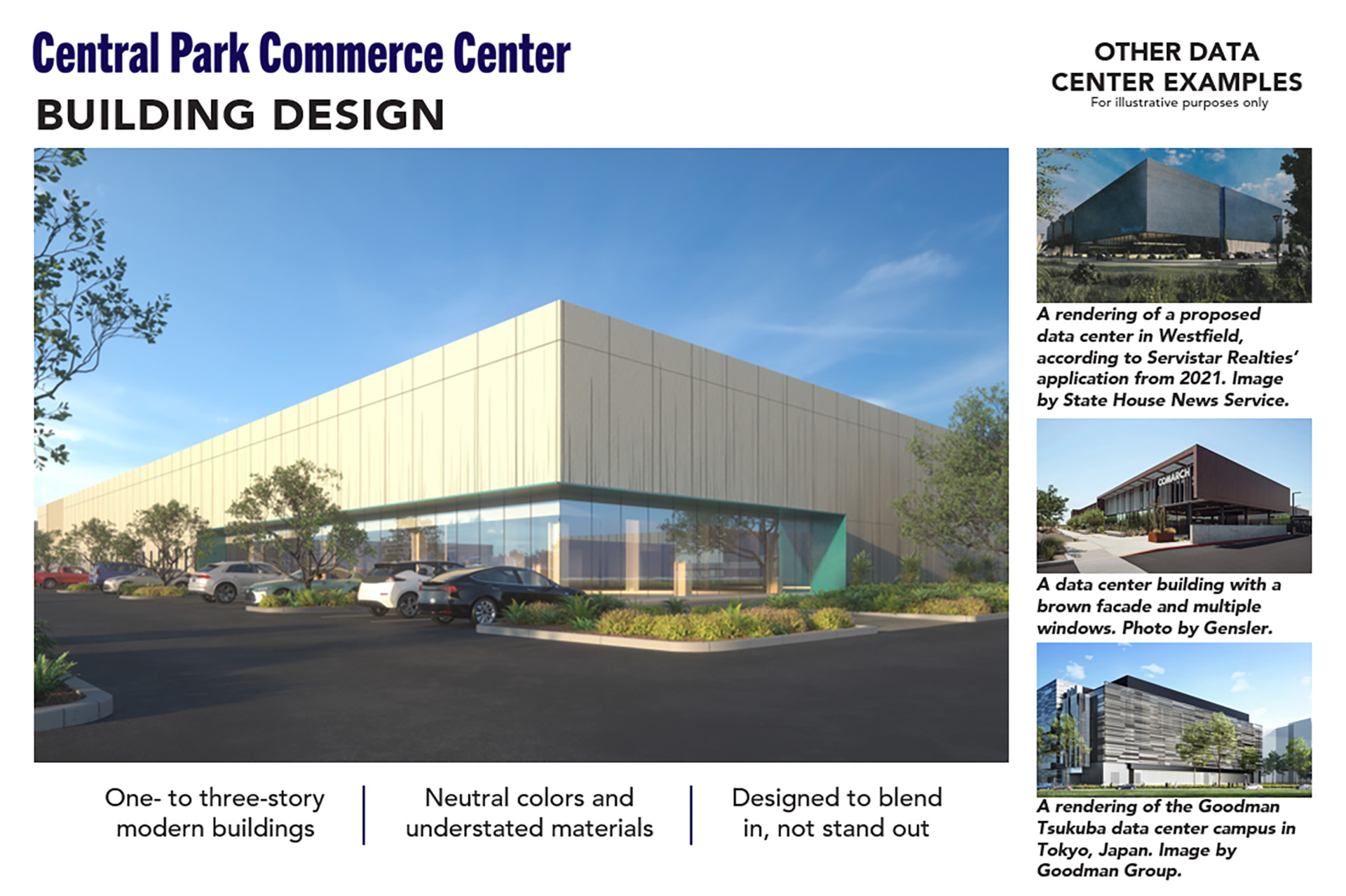
Central Park Commerce Center Building Design

The buildings are expected to resemble modern office or business facilities rather than traditional industrial structures. They would be one to three stories tall, use neutral colors, and feature a low-profile design intended to blend into the surrounding environment.

Will the facility be visible from surrounding areas?
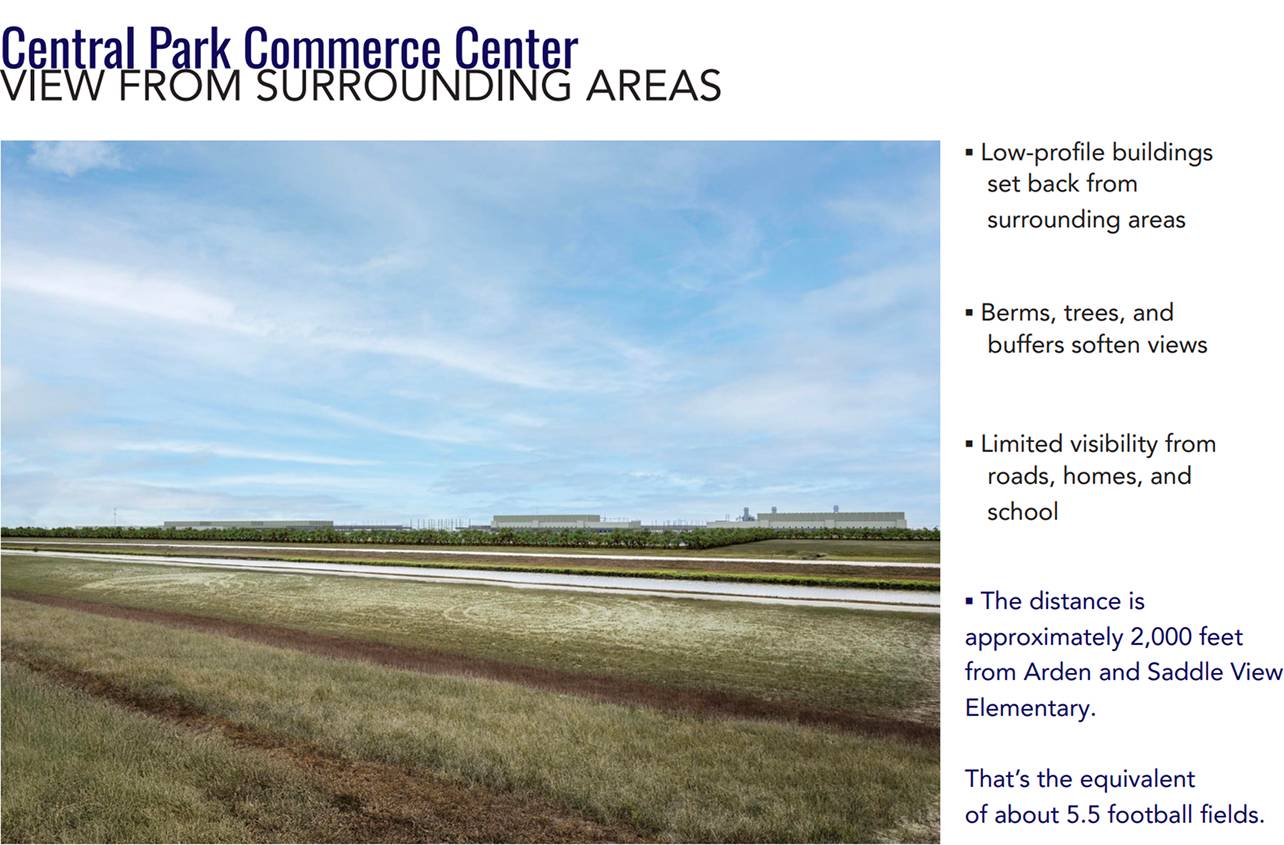
Central Park Commerce Center View From Surrounding Areas

Visibility of the buildings from Arden is expected to be limited due to distance and extensive buffering. Existing vegetation, berms, walls, and additional landscaping will help screen views from nearby roads, homes, and the school. Lighting will be shielded and directed downward to minimize nighttime visibility.

What will the facility sound like?
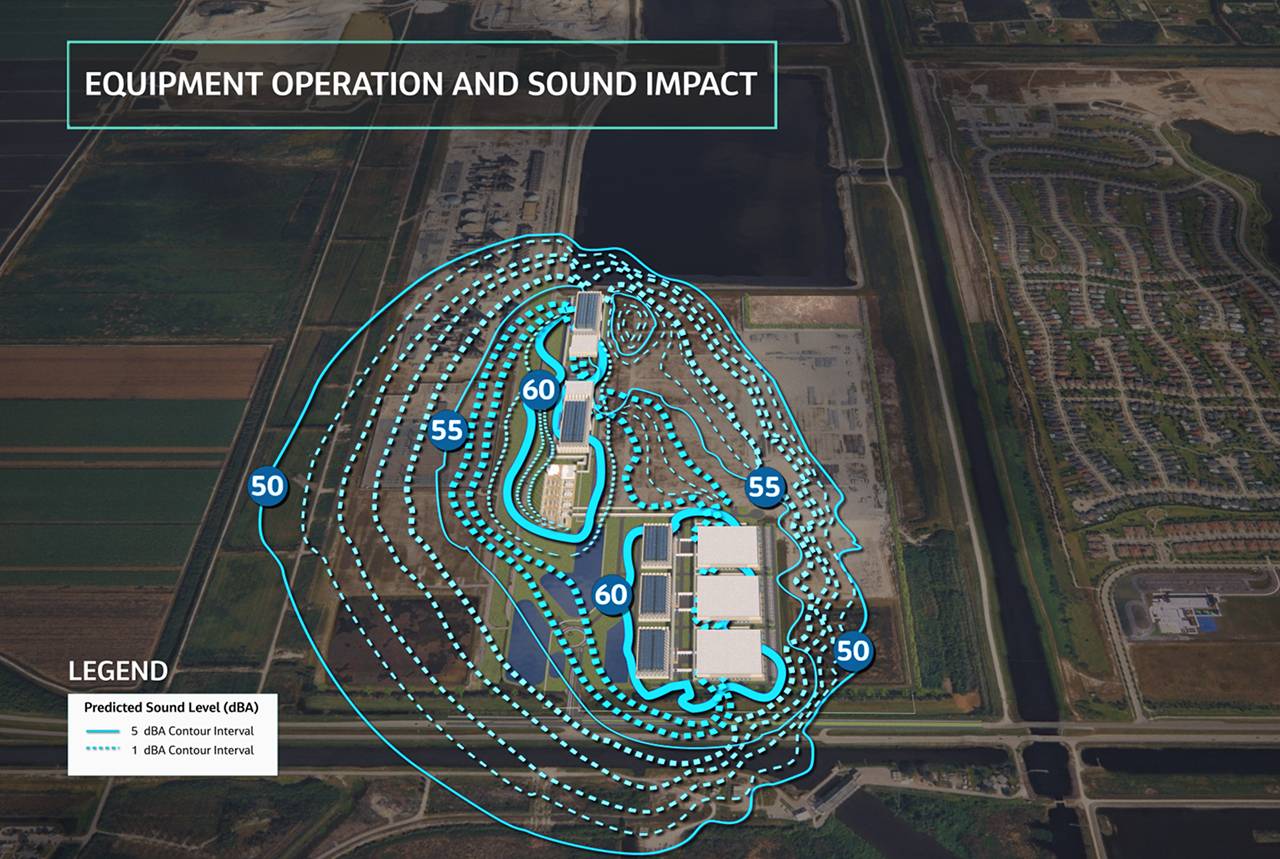
Central Park Commerce Center What Will The Data Center Sound Like?

Data centers are designed to operate quietly and continuously. The data center equipment will be located inside enclosed buildings, which have been moved west, closer to the power plant and farther away from Arden.

With setbacks, landscaping, and berms, sound levels at the property line are expected to be at or below 50 decibels, which is comparable to a quiet suburban neighborhood, distant traffic, wind in trees, or light rainfall. The project must comply with Palm Beach County noise standards at all times.

How much water will the facility use, and will it affect local water supply or water quality?
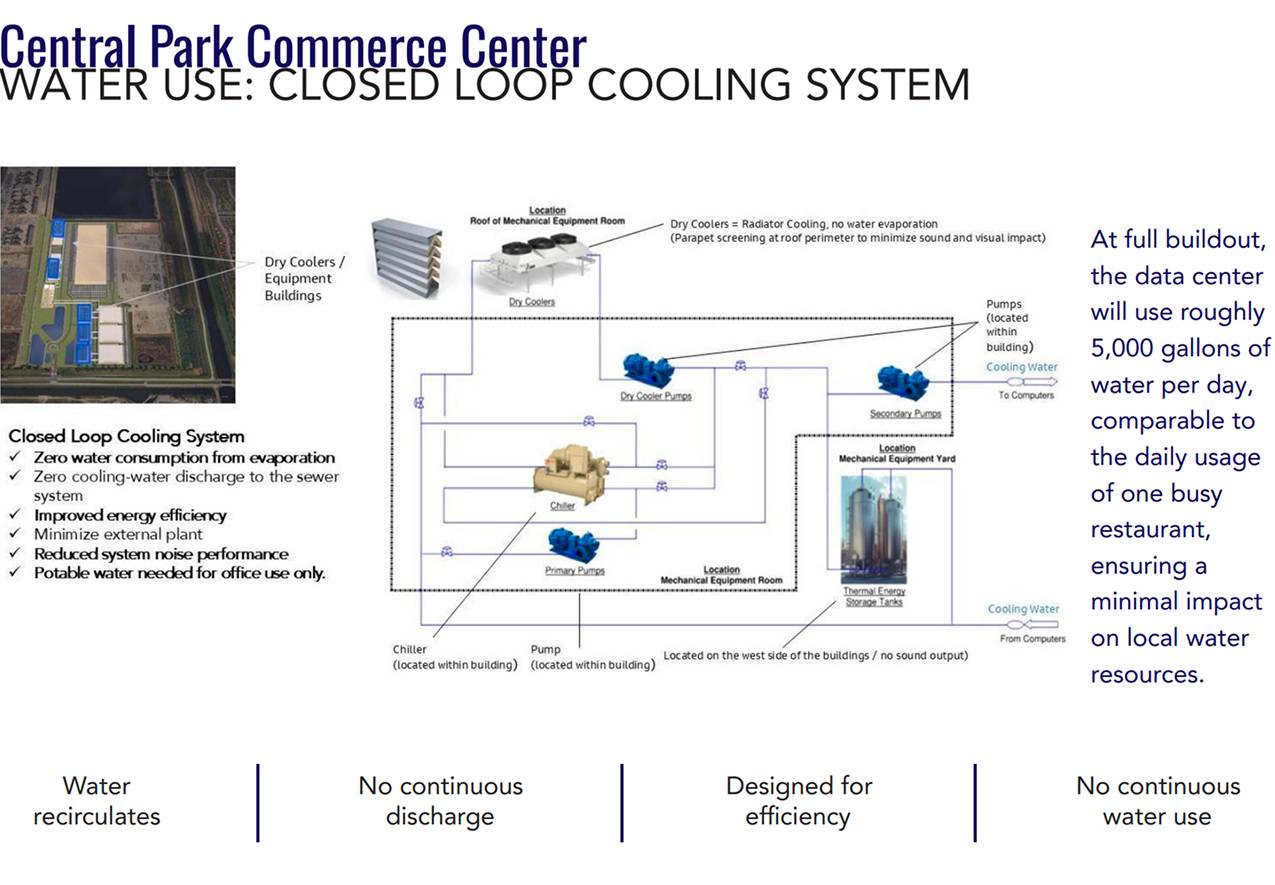
Central Park Commerce Center Water Use: Closed Loop Cooling System

County utilities have confirmed they have sufficient capacity to serve the project without affecting existing customers' water service.

The data center is designed to use water efficiently and is not expected to affect local drinking water supplies or water quality. The facility will not use private wells and will not draw water directly from local lakes, canals, or groundwater sources. The data center will not discharge water into ponds, canals, or offsite.

The facility will use a closed-loop cooling system that recirculates the same water repeatedly, greatly reducing overall consumption. At full build-out, estimated water use is about 5,000 gallons per day, roughly the amount used by one busy restaurant. Earlier phases would use significantly less.

Because the cooling system reuses water, only small amounts need to be replaced periodically.

In addition, engineered stormwater systems on site will capture and manage rainfall to prevent runoff impacts to surrounding properties and waterways. These systems must meet or exceed County and State standards designed to protect water quality, even during severe storms.


How will electricity be supplied, and will it affect electric bills or power availability for others?

Any power infrastructure needed for the project would be funded by the project itself, not by local residents or businesses.

Data centers require electricity to operate computer equipment, but this project is not expected to affect electric bills or power availability for nearby homes and businesses. Power will be provided by Florida Power & Light (FPL) under a special large-load rate structure that applies to major energy users. Under this program, large projects must pay for the infrastructure needed to serve their operations and pay for all the power to be used.

This structure is designed to protect existing residential and business customers from rate increases related to the project. Any new electric infrastructure needed to serve the Central Park Commerce Center would be funded by the project, not by other customers. Utilities regularly plan for growth and add capacity as needed, and this site is located next to major existing electrical facilities, making it well suited to support this type of use.

What traffic is expected?

Data centers typically generate relatively low traffic compared to many other industrial uses. Daily activity generally involves a modest workforce - approximately 20 to 50 employees per phase - along with occasional service visits and infrequent equipment deliveries. The facility is not open to the public and does not rely on continuous freight operations.

A new entrance from Southern Boulevard has already been constructed to safely access the site, with additional turning lanes, and a commitment to install a traffic signal once warranted.

What safety measures will be in place?

Data centers must comply with strict building, fire, electrical, and safety codes. They include advanced fire detection and suppression systems, emergency response planning, trained personnel, and coordination with local first responders. Facilities also feature controlled access and on-site security.

How will the project protect the environment?

Most operations occur inside enclosed buildings and do not involve manufacturing processes. The project will use engineered stormwater systems to manage rainfall and runoff, meet regulatory requirements for water quality protection, and comply with all applicable environmental regulations. Any regulated materials stored on site must meet state and federal safety standards.

Why was this location selected?

The site offers several advantages for a technology facility, including existing industrial zoning, proximity to major electrical infrastructure, access to fiber-optic networks, and a flood-resilient location. It is also located along a major transportation corridor, which helps limit impacts on local neighborhood streets.

What could be built on this property under current zoning?

Under existing approvals, the site could be developed with a range of industrial and employment uses such as manufacturing, research and development, recycling operations, or contractor storage.

What benefits could the project bring to the community?

The project is expected to expand the local tax base, create high-skill technology jobs, support additional businesses and services, and generate long-term public revenue. Data centers typically require relatively few public services compared to other industrial uses.

How will the community be kept informed as the project moves forward?

Before construction can begin, the project must complete a detailed review and approval process involving multiple County departments and regulatory agencies. Updates and additional information will be shared through official project communications and public processes as plans progress.

How do I stay informed about Central Park Commerce Center (Project Tango)?

Click here.