

This website is intended to provide clear information about the Central Park Commerce Center project. Additional details will be shared as plans advance through the review process.
On April 9, the Palm Beach County Democratic Party passed a resolution calling for a moratorium on AI data centers.
The single-page resolution does not mention Project Tango—the proposed hyperscale data center in western Palm Beach County. But the timing is hard to ignore. In recent weeks, opponents have packed public hearings, even when the project wasn’t on the agenda.
The resolution’s six “WHEREAS” clauses contain no outright factual errors. But they rely on sweeping generalizations—drawn from worst-case scenarios in other communities. Electric bills doubling. Water pressure dropping. Sleepless nights from industrial noise. Even reports of cancer clusters, miscarriages, and ecological damage.
The implication is clear: Project Tango would bring the same.
The problem? Much of that doesn’t apply here.
So let’s take a closer look.
Power and electric bills
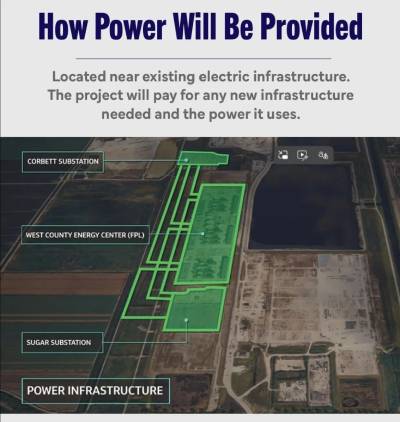
The resolution warns that large-scale AI data centers consume enormous amounts of electricity—sometimes rivaling small cities—and can drive up costs for residents.
That concern is real. But in Florida, there are guardrails.
Background: Project Tango: Who Pays The Bill?
Florida Power & Light cannot legally pass the cost of building and serving a hyperscale data center on to ratepayers. The Florida Public Service Commission has already approved a tariff designed to prevent that. Lawmakers reinforced those protections in March through Senate Bill 484.
Read FPL's policy on data center growth and ratepayer protections
In short: Project Tango will not increase your electric bill.
Health concerns
The resolution cites reports of cancer clusters and miscarriages near data centers.
Those claims surface often in communities facing large infrastructure projects. But there is no scientific evidence that data centers cause cancer or increase the risk of miscarriage. Research into electromagnetic exposure has produced inconsistent results, and the levels associated with these facilities are typically low.
The fears are real. The evidence isn’t.
Jobs and subsidies

The resolution also argues that data centers provide few local jobs while extracting public subsidies.
It’s true that hyperscale data centers employ relatively small, highly specialized workforces. That’s part of the reason Project Tango asked the county to reduce parking requirements.
But according to Kelly Smallridge, CEO of the county’s Business Development Board, the project is not receiving public subsidies or financial incentives.
Water
This was one of my biggest concerns.
The site sits across the highway from the Arthur R. Marshall Loxahatchee National Wildlife Refuge—226 square miles of Everglades ecosystems. Water here is already under pressure from growth, agriculture, and restoration mandates.
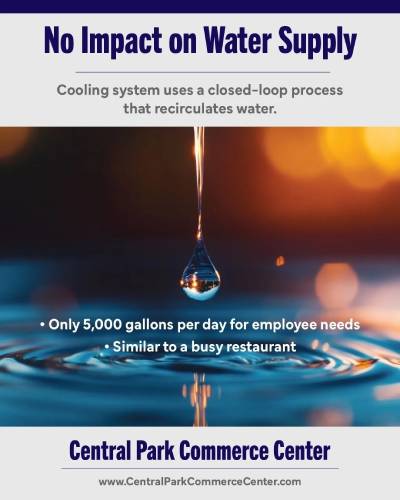
Would millions of gallons be diverted to cool servers? Would wastewater be injected underground?
According to project representatives, no.
Projected water use is less than 6,000 gallons per day—a fraction of what a golf course can use. The system is designed to avoid discharges into canals, lakes, or reservoirs, and does not rely on deep well injection.
Those claims still need scrutiny. But they matter.
So…should there be a moratorium?
I don’t know.
But I do know this: Local governments are behind.
While the Public Service Commission is already reviewing tariffs for these massive new users of electricity, local building and zoning codes haven’t caught up.
That’s where the real decisions get made. Not at zoning hearings. Not at county commission meetings. But in the fine print in building codes and zoning regulations.
MORE: Florida Dropped Data Center Transparency. Why?
If local officials want to protect communities, they can:
- Set specific performance standards that steer developers toward more energy and water efficient systems.
- Ban high-consumption cooling systems, like evaporative cooling.
- Require use of reclaimed water when available.
- Require independent sound studies and testing at various times of the day.
- Limit the number of generators, hours of testing and set emission limits.
- Establish minimum setbacks from homes and schools.
- Public disclosure of the type of cooling system, water source and peak power demand.
The question isn’t whether data centers are coming. They are.
The question is whether local governments will set the rules before they arrive.
And if they don’t, a moratorium may be the only way to catch up.